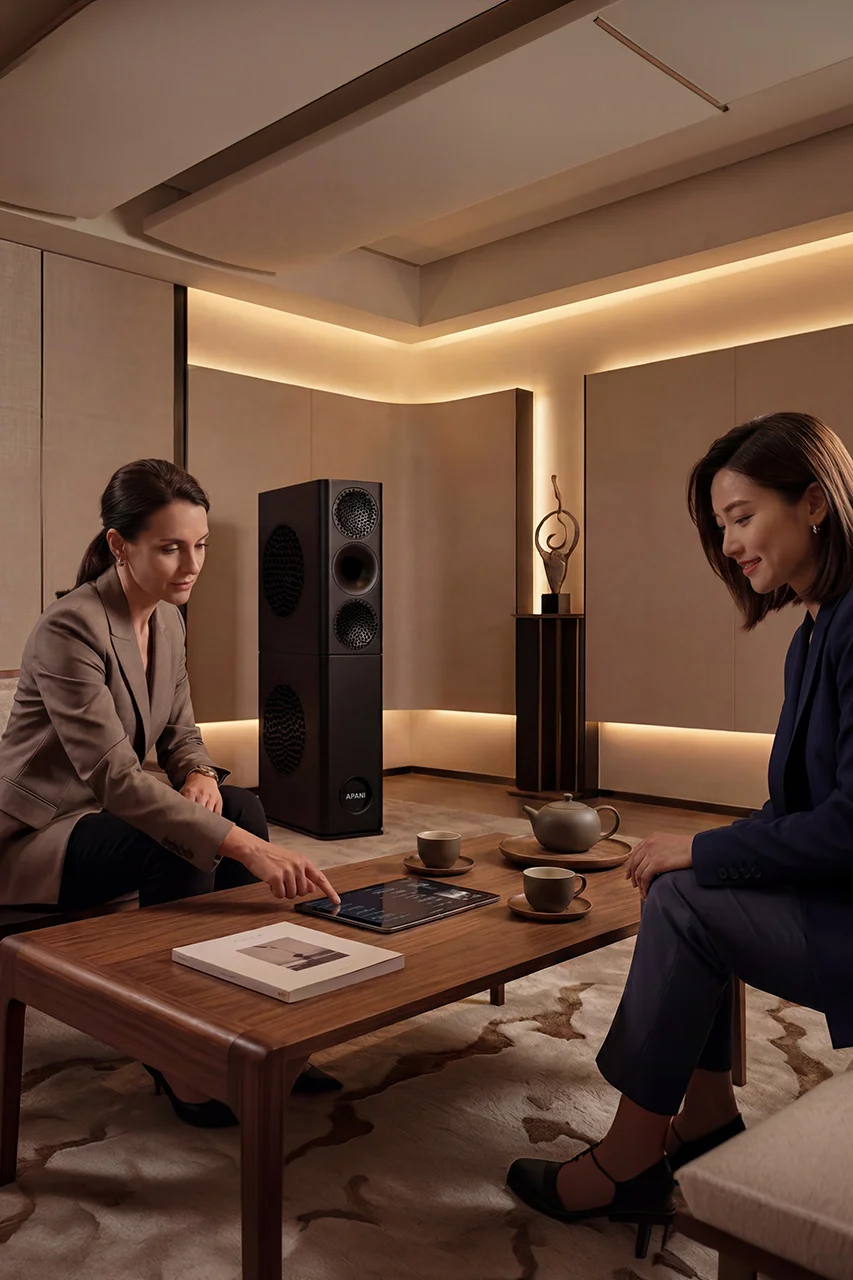
What a Music Transformer actually does
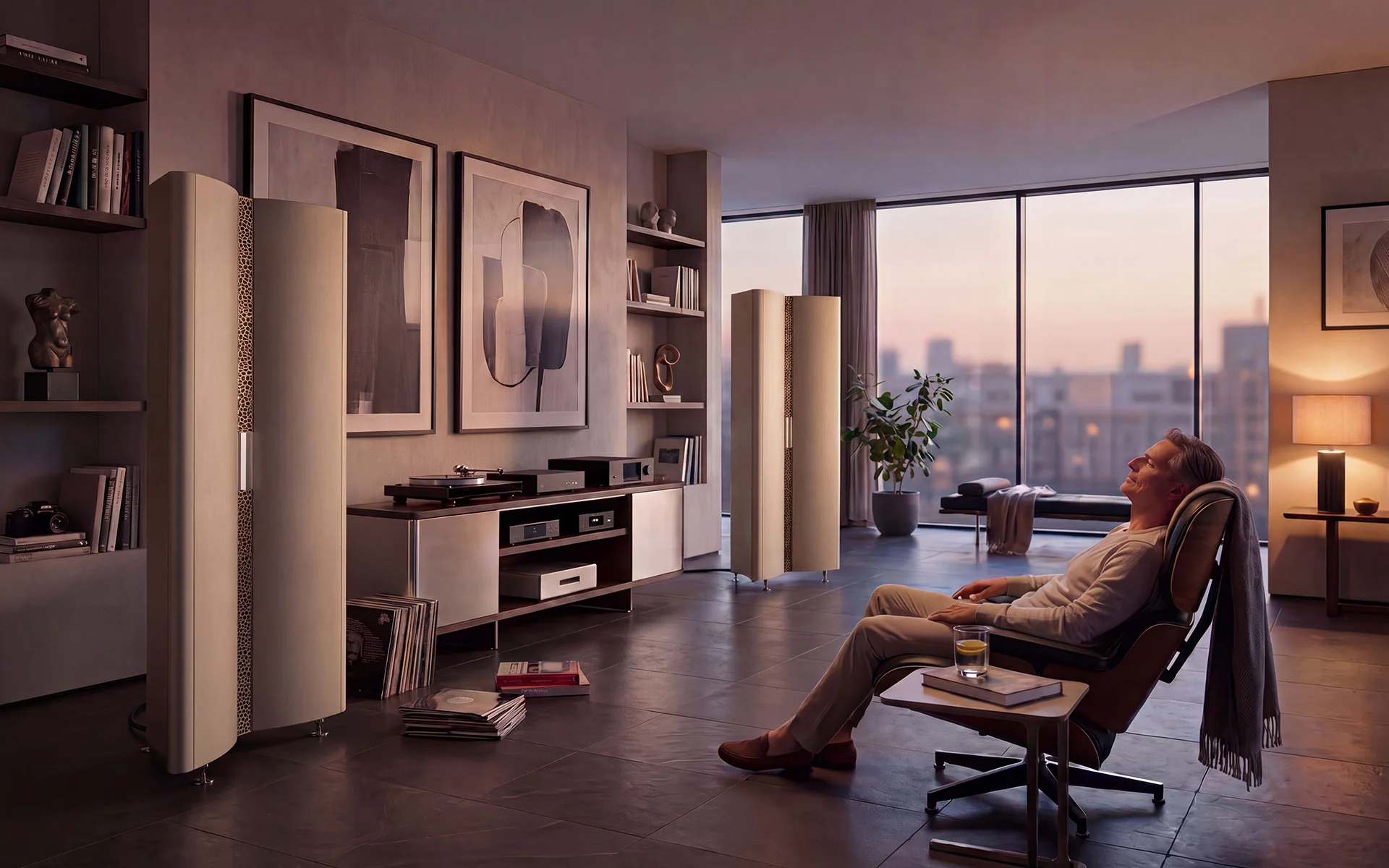
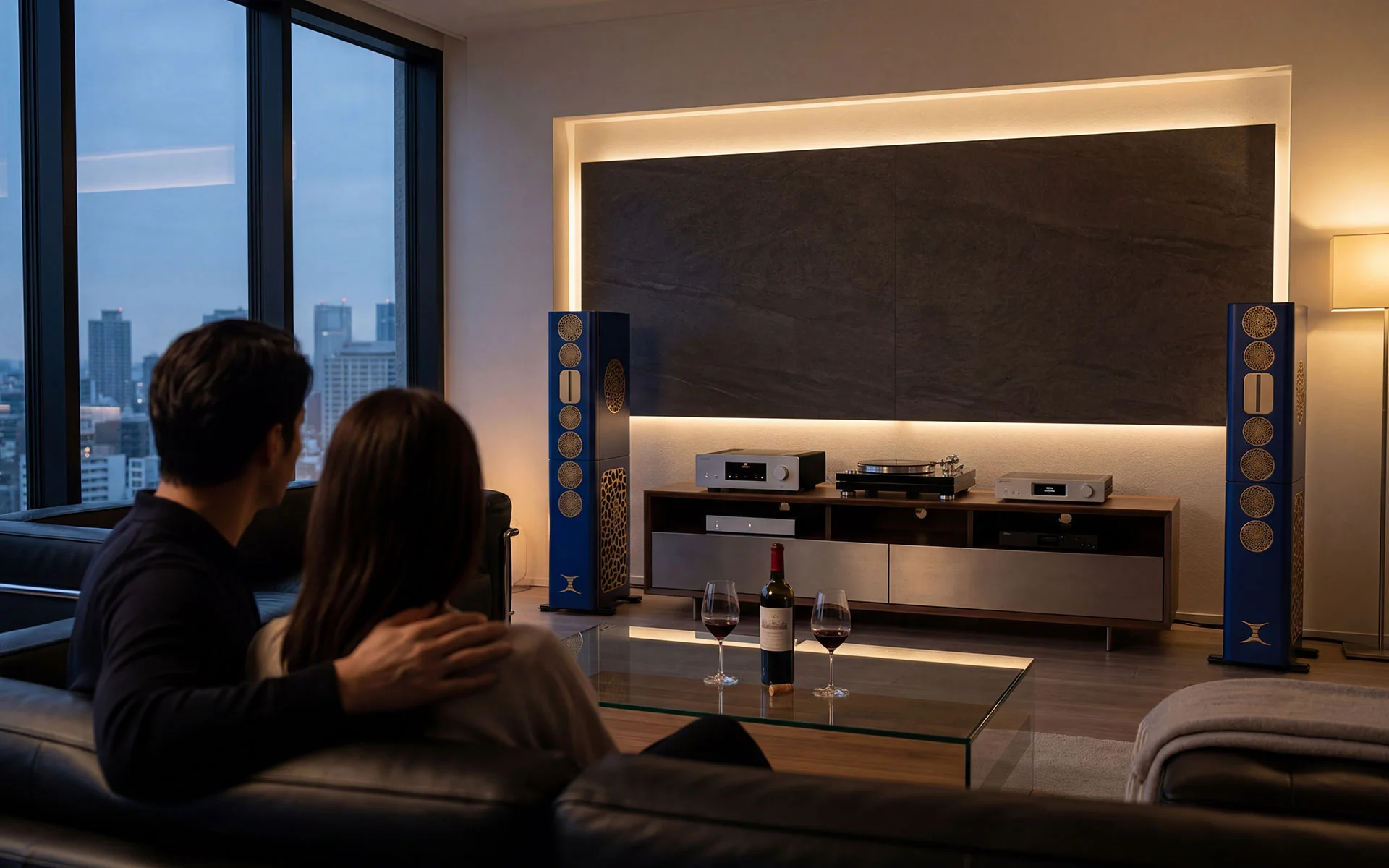
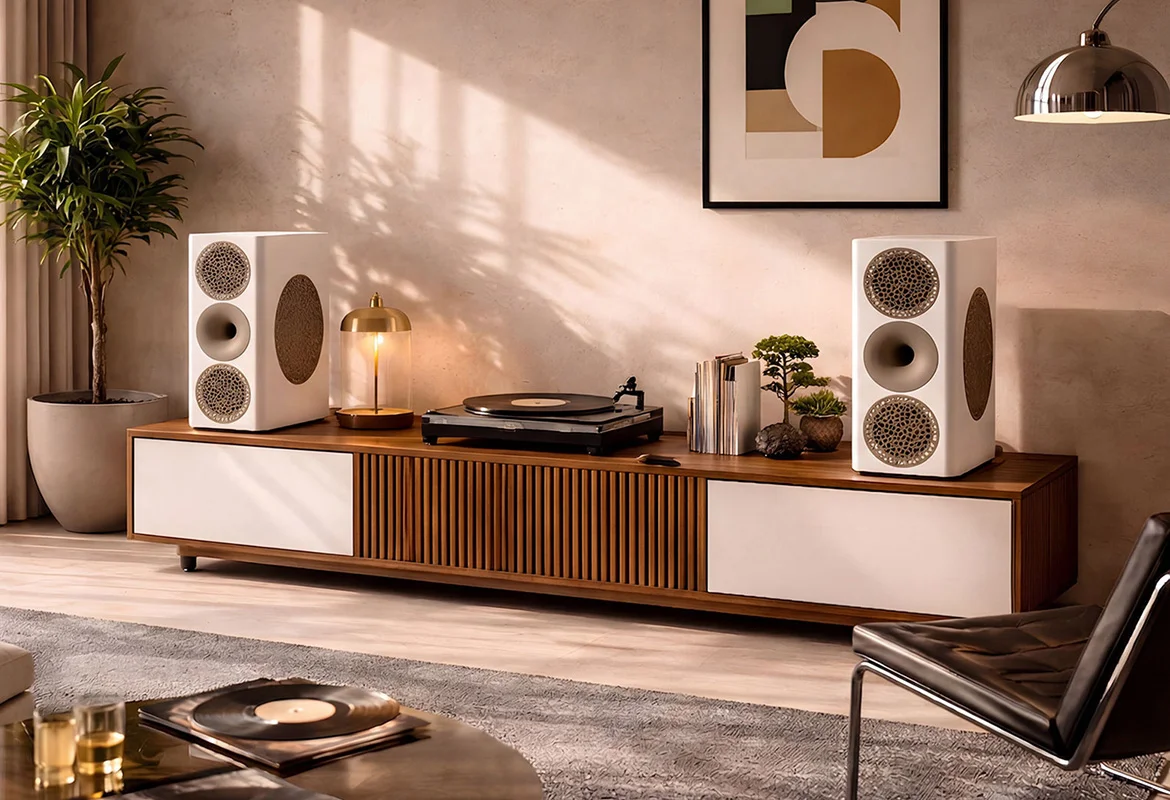
An APANI Music Transformer is engineered to turn recorded information back into human musical experience. It is not built simply to project sound into a room. It is built to restore presence, space, timing, dynamics, physicality and emotion. It restores breath to the voice, body to rhythm, scale to space, tension to silence, emotion to detail, and presence to playback.
The name matters for that reason. A conventional loudspeaker can be judged by its specification sheet. A Music Transformer has to be judged by a different set of questions. Does the singer feel closer to being human? Does the instrument occupy a believable space? Does the rhythm reach the body? Does the room inside the recording open? Does the listener stop analysing sound and start entering the music?
An instrument of return
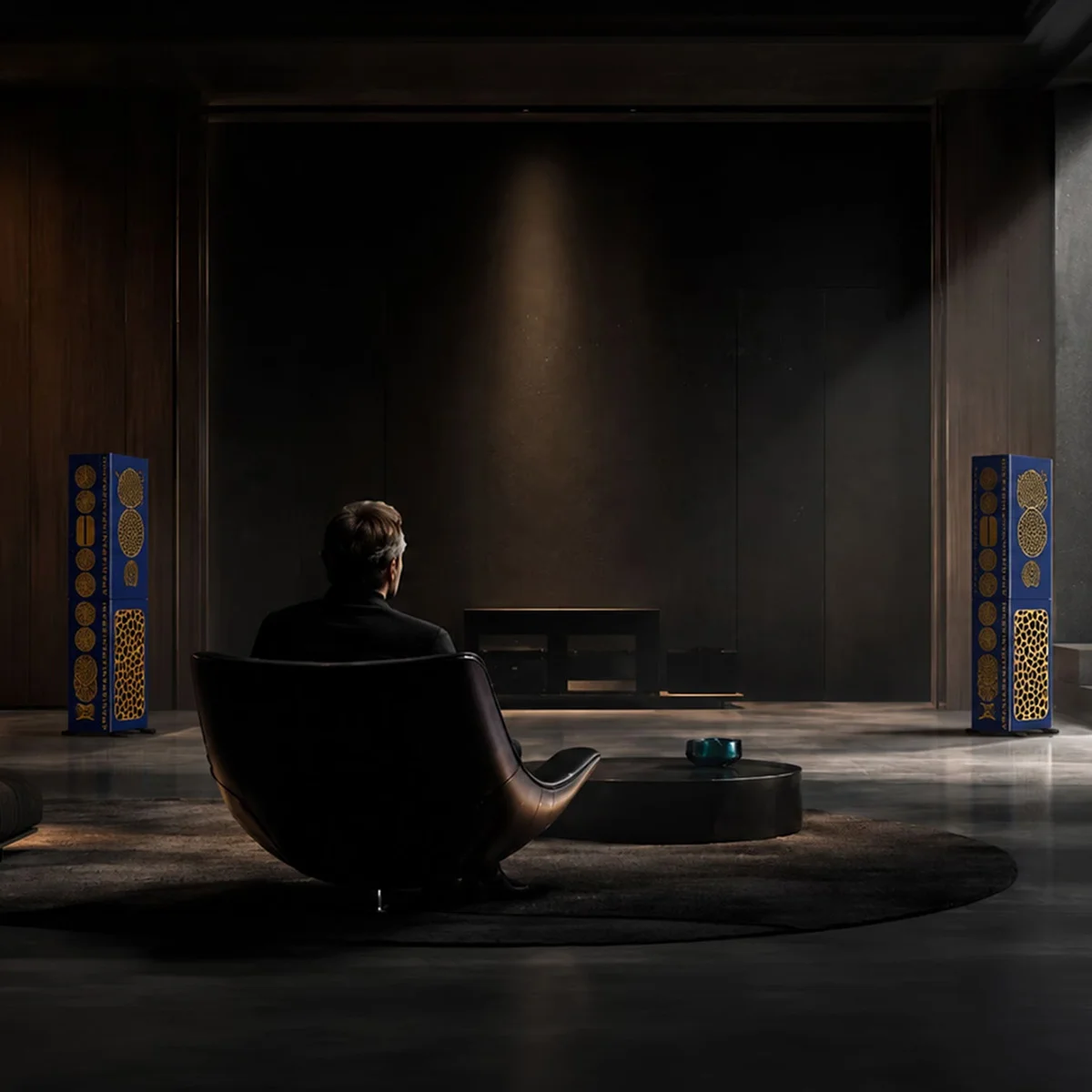
The Music Transformer is not an object built to be admired. It is an instrument of return: from sound to presence, from playback to experience, from information to emotion, from memory to living reality. When it works as intended it removes itself from the equation. APANI disappears where music becomes present.
Music, transformed rather than reproduced
The formula APANI works to is straightforward. A recording is not the music itself, it is a trace of the music, and the task of reproduction is to turn that trace back into a living event rather than to add a character of its own. When conventional reproduction adds its own signature, a Music Transformer is built to disappear behind the signal instead. This is the difference between hearing music and living music.
To achieve it, APANI developed the proprietary technologies you will find in the rest of this section: FIRTEC to preserve time, DMC2.0 to preserve control, NeXt to preserve the direct signal in real rooms, the Massless Membrane Principle to preserve the sound at its source, and Fullscale Bit-Perfect to preserve the electrical signal end to end. Each addresses a different way that conventional reproduction gives ground.