Form follows function
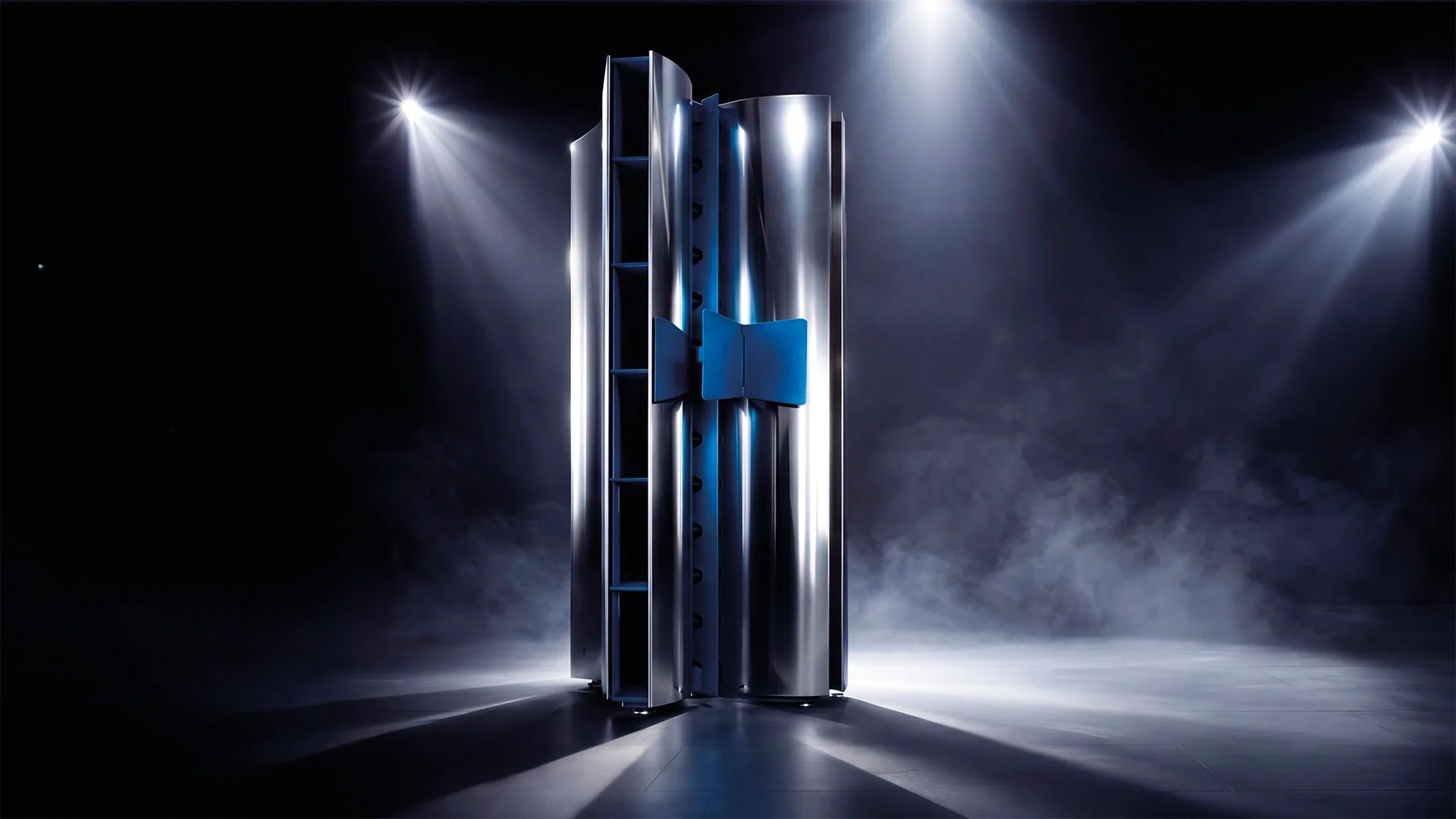
Different listening rooms are different acoustic problems. A large room and long listening distances demand a different solution than a nearfield setup, so a loudspeaker built to be one size for every room is already a compromise. Qeviko follows that logic without exception, in both engineering and design. Its cabinet is not shaped to impress. It is shaped to be true to what the sound generation inside it actually requires, which is why an organic acoustic process produces an organic cabinet form rather than a decorative one.
Qeviko is not loyal to a single doctrine either. Depending on the room and the material it is built for, its architecture draws on established approaches, cylindrical wave emission, horn loading, digital correction, or analogue control, choosing whichever concept produces the most authentic result in that specific space. The aim throughout is the same: reproduction close enough to a live performance that the distinction stops mattering.
Coaxial horn and cylindrical wave emitter
Qeviko's high frequency section combines a coaxial horn with a cylindrical wave emitter, not as marketing features but as consequences: consequences of how air actually behaves, of distance, and of time. A horn and a cylindrical radiator solve different parts of the same problem, directing energy predictably enough that tonal balance and imaging remain stable well beyond the sweet spot most loudspeakers depend on.
The bass path
Qeviko's bass section uses twelve inch drivers powered by neodymium magnets, but the output is not simply released into the room. It is shaped: guided through side mounted bass jets that run the full height of the cabinet, deflecting and directing energy rather than letting it disperse randomly. Bass waves can extend to ten metres in length, and anything that long needs to be guided rather than left to fill the room unevenly.
The jets sit at the sides by design, framing the loudspeaker and keeping the bass output stable and directional even across long listening distances. Behind that mechanical structure sits Backes & Müller's DMC technology, an analogue control system that measures the actual movement of the bass membrane in real time and corrects it for impulse fidelity, reducing the decaying oscillations that make bass sound like fog rather than music. The result is linear phase reproduction through the bass path: bass that arrives, bass that leaves, and does not linger.
Handcrafted, audiophile manufacture
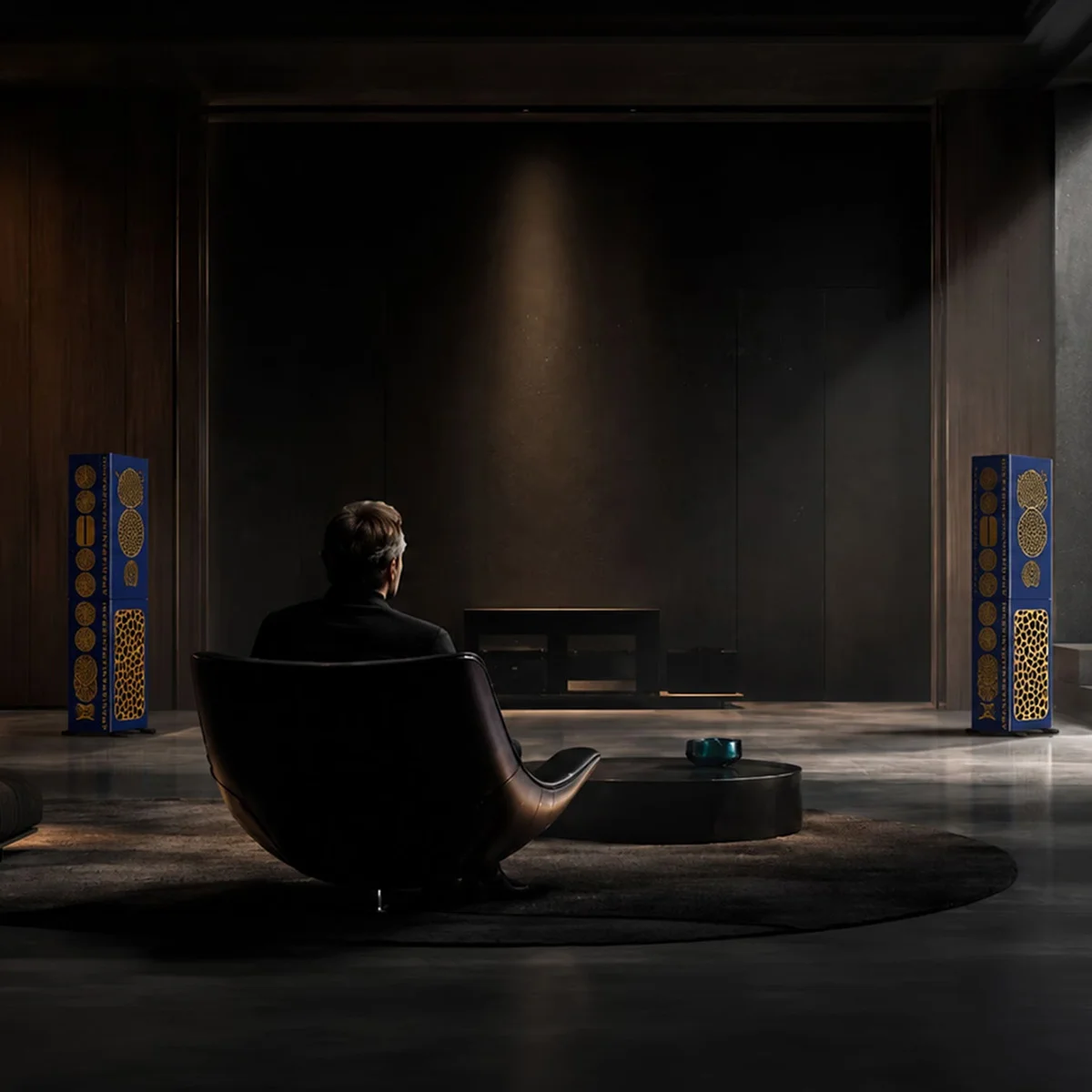
Qeviko is built by Backes & Müller in a manufactory tradition rather than on a mass production line, with the finish and materials selected to suit the room it will live in. It is available in the standard APANI finishes and, where the project calls for it, in fully bespoke materials and colour.